There is one question that comes up in almost every meeting we have with a new prospect: can your product coach the agent to sell live, during the call?
It can. Live assist is part of what we do, and if that's what you need, you'll get it. But my answer is a bit longer than yes, because the calls where live assist helps most aren't always the ones people have in mind when they ask.
I don't think customer service agents should be asked to sell. I know that sounds odd coming from someone whose company finds sales opportunities in service calls. Let me explain.
Everyone wants service-to-sales to work
I've spent most of my career in sales and customer service, and turning customer service agents into salespeople is the thing everyone wants to crack. Telco, insurance, banking, travel, it doesn't matter.
The logic is hard to argue with. Customer service talks to more customers than anyone else in the company and the agent is already on the line, so why not make the offer there and then?
I've rarely seen anyone manage it (and believe me, I wanted it to work). The biggest reason is the one that gets the least attention: it's a poor experience for the customer.
The customer didn't call to buy. They called because something was wrong, and they want it fixed. Often they've waited in a queue to get that far. A pitch at that moment tells them you weren't really listening.
Customers remember it. If every call to customer service ends with an offer, people learn to expect it. Some stop mentioning anything about their lives and some put off calling at all, which means you hear less from your customers, and what they tell you is the most valuable thing you have.
It doesn't work well from the inside either. People who are good at service took the job to help people. Most of them don't want to sell, and the customer can hear that when they try. Their targets pull the other way too: every minute spent on an offer makes handling time worse.
I've been that customer
I've been on the other side of this myself. When I recently moved my family over to the USA, I spent hours on the phone with customer service to get phone lines, fiber and all our accounts set up. There was a new hurdle at every turn, and although almost everyone I spoke to was very nice, it was really frustrating at times.
If any of those agents had tried to sell me something in the middle of all that, I would have lost my patience, however nicely they asked, because all I wanted was to get things working.
The funny thing is that I was probably a great lead. A family that has just moved needs pretty much everything, and that would have been obvious to anyone listening to those calls.
A week later I would still have needed all of it. Nothing about that opportunity had to be closed on those calls.
Listen first, sell later
So fix the problem and let the customer get on with their day. Then have someone who sells for a living call back with an offer that makes sense for them.
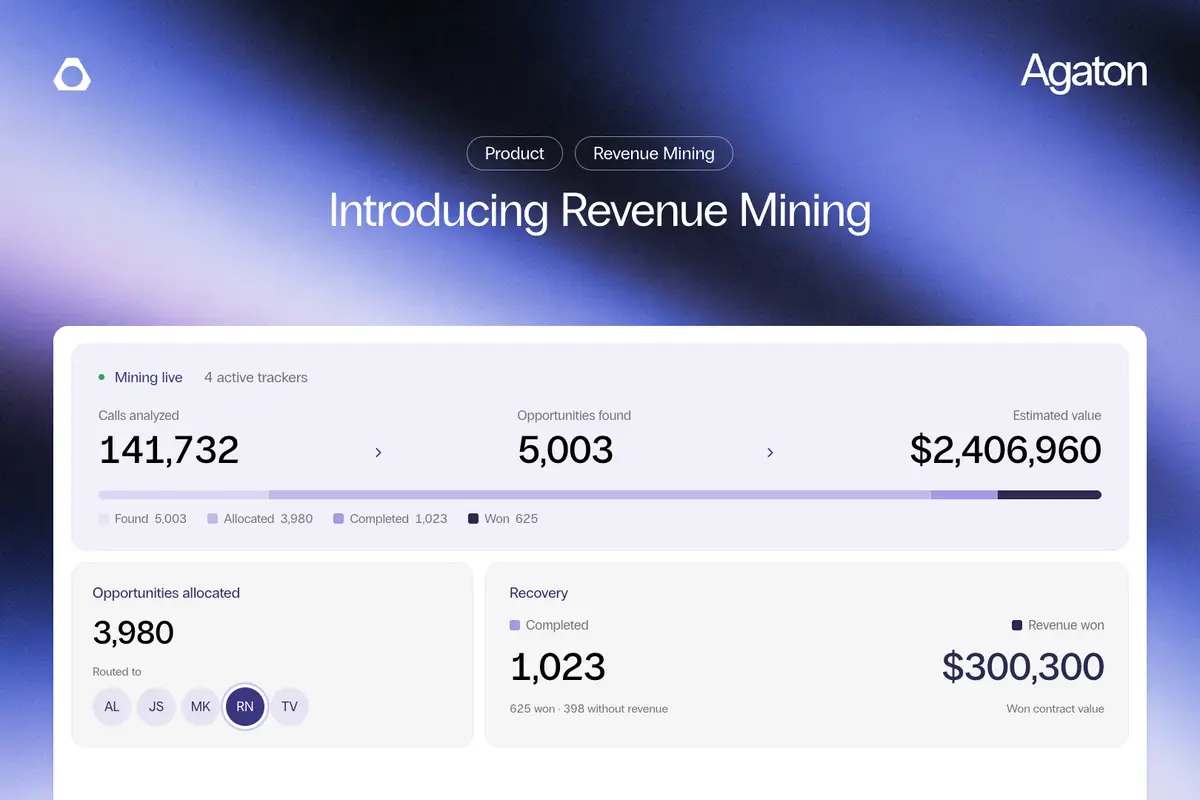
That is how our most successful customers work. We listen to the service calls after they happen and pick out the ones where the customer said something that matters. A dedicated sales team, which works nothing else, gets a short list: who to call, why, and what the customer actually said.
The same idea holds well outside telco:
- The hotel guest who mentions, while changing a booking, that they're coming back in June for their anniversary.
- The energy customer who asks about a bill and says they're getting an electric car next month.
- The bank customer who calls about a blocked card and mentions that their son starts university in the autumn.
And that call is very different from a cold call, because the problem that made them ring in the first place is already solved and the person calling knows what they said. From the customer's side, it feels like the company paid attention.
Where live assist earns its place
None of this is an argument against live assist. We offer it, and there are calls where nothing else will do.
The clearest case is a cancellation. If someone calls to cancel, and a save offer could change their mind, the moment is the call itself. The agent needs the right offer in front of them while the customer is still on the line.
The same goes when the customer asks directly. If I had asked one of those agents "is there a better package for all of this?", they should have answered there and then, and live assist would have helped them get it right.
So the choice isn't live assist or follow-up. Most companies will want both. The question I ask is simpler: does this opportunity have to be won on this call?
If it does, give the agent live assist and win it there. If it doesn't, let the agent finish the job the customer called about and have a specialist call back.
And if you'd rather run live assist on every call, we can do that too. It's your operation, and you know your customers and your agents better than we do.
Who should own this
One reason service-to-sales so often stalls is that it lands on the wrong desk. The head of customer service usually doesn't carry a sales target. Asking that team to sell means asking them to do extra work towards someone else's number.
A dedicated team working warm leads belongs in sales. If you run sales, or you're responsible for both sales and service, this is your project. The leads are already there, in calls your company is having every day.
The service leader gets something out of it too. Their agents get to do the job they're good at, without a sales script in the way.
Let service be service
If one of those companies had called me a week after my move, once everything was working, with an offer based on what I had told their agents, I would have listened.
Customer service agents should do service and salespeople should sell. The trick is making sure the second group hears what the first group heard.
Want to see what your customer service agents are already hearing? Book a demo and we'll show you what Agaton finds in your calls.